Have You Seen Our Clock Buying Guide?
We have developed a master guide to purchasing a custom Grandfather clock. Fill out the form to get access to our guide. (no email required)
Clueless about how to take care of your windup clock? Here are all the tips and tricks to help you keep your clock in good shape.
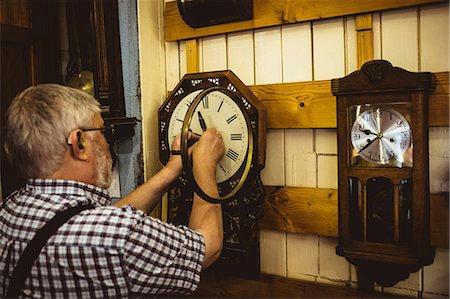
In a world where digital high-tech devices dominate our daily lives, owning an antique windup wall clock is truly comforting. These timeless pieces hold a sense of nostalgia, which you cherish as a treasure in your home.
However, just like any of your possessions, these elegant devices also require proper care, attention, and timely maintenance. But, sometimes, figuring out the clock mechanics, chime adjustments, and pendulum setup gets a bit overwhelming.
In this article, we are going to elaborate on all the tips and tricks that will help you keep your windup wall clocks in good shape. So, let’s start!
To ensure accurate timekeeping, the clock should be winded regularly, per the manufacturer’s instructions. For 30-hour clocks, it is recommended to wind it roughly at the same time of the day.
Moreover, eight-day clocks, which are designed to run an entire week, must be wound on the same day of the week. Make sure the key you use for winding fits the winding square properly.
For spring-driven mantel clocks, brackets, and most wall clocks, rotate the key steadily until it reaches a positive stop. Also, you should avoid overwinding as it may damage the clock’s mechanism. So, always wind your clock gently.
Moreover, it is suggested that you memorize the number of turns required to wind your clock fully. This way, you can perfectly wind your clock without going too fast.
If you wish to extend the life of your treasured windup wall clock, it’s important to keep the clock away from sunlight or extreme temperature changes. Prolonged overexposure to sunlight can fade the wood color and stain.
Not only this, but extreme temperature changes may affect the clock’s mechanism, eventually affecting the timekeeping accuracy of the clock.
It is essential to clean your clock whenever required. For satisfactory cleaning, make sure to use a soft, lint-free cloth. Especially if you are considering oiling your windup clock, it’s always better to dust and clean it first.
If you wonder how often you should oil your clock, there is no definitive answer, as it depends on various factors such as:
So, it is highly recommended that you seek professional help with clock oiling. But if you are determined to oil it yourself, make sure you follow these instructions:
In order to ensure timekeeping accuracy, it’s crucial to take care of your windup clock’s hand setting. However, hand setting is one of the most complex procedures and, thus, should be handled with extreme care.
To ensure the clock’s longevity, never turn the clock’s hand in the opposite direction. Although some clocks allow anti-clockwise turning, most don’t come with this option. In this scenario, opposite turns may cause serious and expensive damage to the clock’s mechanism.
Also, remember that you must turn the minute hand only and avoid turning the hour hand of your windup wall clock. If you have a striking/chiming clock, let the chime finish before you move the hand.
Taking care of pendulum adjustment is crucial to maintaining the mechanical health and timekeeping accuracy of windup wall clocks. Here’s how you can adjust the pendulum.
With close observation, you will be able to notice the timekeeping status of the windup clock. It will take a few small adjustments until the clock tells the precise time.
The more careful you are regarding the handling and mounting of your clock, the longer it will last, with minimum wear and tear. Hence, you must always be considerate while mounting your clock. A stable and level mounting will prevent excessive strain on the clock’s movement.
Similarly, you must handle the clock gently while cleaning, oiling, repairing, or adjusting it. Remember that careless handling may cause unnecessary stress on the internal components and disturb the overall working of your windup clock.
Sometimes, we tend to neglect the manual instructions that come along with the clocks. However, it is always suggested that you refer to the instructions, even if you have vast knowledge about the windup clocks.
Why? Because some clocks come with specific instructions, you might not be familiar with.
Therefore, it is always good practice to go through the instructions and follow the guidelines. This way, you can maintain the appearance and functionality of your windup clocks and prevent potential damage.
Some windup clocks come with additional features, such as battery-operated chimes or pendulums. If your clock has this feature, consider replacing the batteries immediately after running out. Also, make sure you replace the batteries according to the manufacturer’s recommendations.
It’s great if you love taking care of your windup clock yourself. However, it is highly recommended that professional maintenance be considered every few years.
Being a clock enthusiast, you must have constantly learned and adapted to the clock’s maintenance routines. However, a clock specialist will have a deeper look at your clock’s mechanism and point out some issues that you might not be able to diagnose.
Be sure to take your clock to an expert when needed so that they can perform thorough cleaning, lubrication, and inspection of the internal components to ensure optimal accuracy.
Are you interested in handcrafted and unique windup wall clocks? How about getting one made to your liking?
At Old Time Chimes, you can customize your clock directly on our website. Be it wood selection, stain colors, chime sounds, or any additional upgrades, you can pick and choose every single detail according to your taste.
Browse our exclusive collection of Amish-made wall clocks, and feel free to reach out today! Our expert craftsmen are always ready to make the clock of your dreams.