Get First Word on Deals & News
Be the first to hear about special deals, new clock designs, and company news from Old Time Chimes. Unsubscribe anytime.
For decades, Westminster chime grandfather clocks have been a symbol of elegance and mechanical precision. Wondering why? Well, there are a lot of reasons, but the most common one includes the musical chime used in these clocks.
Produced by beating several rods/gongs, these chimes create a melodic vibe that fills the room with cheer. But out of so many grandfather clock chimes, Westminster chime is the one people still love and prefer. Again, wondering why. Well, don’t scratch your mind further – we are going to quench your curiosity!
That said, let’s dig deeper into the world of the Westminster chime, its history and origin, and why it’s the most popular chime!
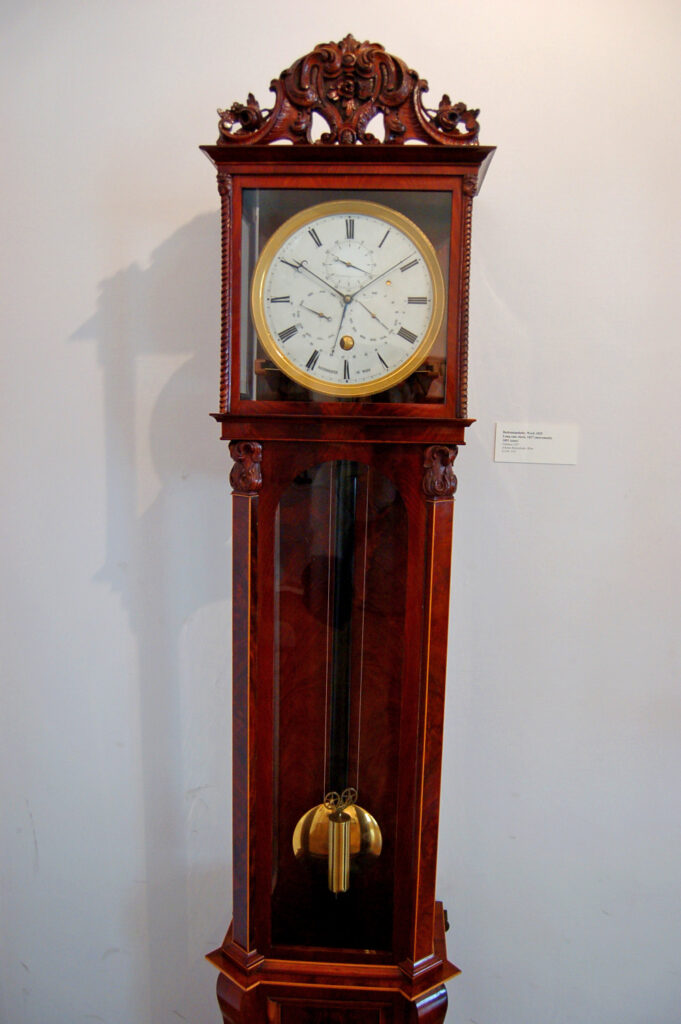
The chimes on grandfather clocks have significant values in terms of aesthetic and practical usage. Firstly, these chimes indicate the passage of time, marking hours with soothing melodies. This, as a result, helps people to track the progression of their day.
Moreover, chimes on grandfather clocks have deep-rooted cultural associations. They create a sense of tradition and nostalgia among people, taking them back to a time when such timepieces were a central piece of décor in many households.
There are various types of chimes produced by grandfather clocks. Here are a few major ones:
These chime patterns may differ in length and intricacy, ranging from basic two-note rhythms to more complex melodies comprising six notes.
As mentioned earlier, among so many chimes used on grandfather clocks, Westminster chimes stand out as the most popular ones. Here’s why:
Let’s explore all about the origin, history, and fame of Westminster Chime:
The history of Westminster Chimes, also known as the Cambridge Quarters, traces back to England in the late 18th century. The melody was initially commissioned in 1793 by the University Church in St. Mary the Great in Cambridge, UK.
There’s some debate over the origins of the melody. While Joseph Jowett, the Regius Professor of Civil Law, was initially tasked with its composition, it’s believed he received assistance from either John Randall, the Professor of Music, or William Crotch, his undergraduate pupil.
One theory suggests that the melody of the Westminster chime may have been inspired by George Fredrick Handel’s aria, “I Know That My Redeemer Liveth.” However, it was immediately dismissed, as strong evidence supporting this claim was lacking.
The fame of the Westminster chime soared when it was adopted in 1851 by Edmund Beckett Denison for the clock at the Palace of Westminster, home to the iconic Big Ben. This adoption propelled the chime’s popularity, leading to its widespread use in striking clocks worldwide.
In December 1875, the chime made its debut in the United States at Trinity Episcopal Church in Williamsport, Pennsylvania, installed by E. Howard & Co. of Boston, Massachusetts. Since then, the chime has become one of the most recognizable and commonly used melodies for striking clocks.
To wrap it all up, the popularity of the Westminster Chime on grandfather clocks can be attributed to a combination of historical significance, aesthetic appeal, and cultural resonance. As one of the most recognizable chimes worldwide, the Westminster Chime has become synonymous with the timeless charm of grandfather clocks.
Looking to own a piece of this iconic tradition? Well, Old Times Chimes is your one-stop solution. We offer an exclusive selection of Westminster grandfather clocks that embody timeless elegance.
So, visit Old Time Chimes and browse our collection now!
Not all grandfather clocks chime, as some may be equipped solely with timekeeping mechanisms. Chiming functionality varies among models, with some featuring the Westminster Chime or other melodies, while others may be designed to strike the hour without musical accompaniment.
The origins of the Westminster Chimes, also known as Cambridge Chimes, date back to the late 18th century. These chimes gained prominence with the installation of the Great Clock of Westminster, commonly known as Big Ben, in 1859.
The tune of the Westminster Chimes comprises four distinct notes played in a specific sequence: G3, F3, E3, and D3. This musical arrangement, known as the “Cambridge Quarters,” is repeated every quarter hour.