Have You Seen Our Clock Buying Guide?
We have developed a master guide to purchasing a custom Grandfather clock. Fill out the form to get access to our guide. (no email required)
Traditional mantel clocks hold a special place in family histories, often becoming cherished heirlooms passed down through the years. Wondering why? Well, these timepieces have a unique style and design that brings grace to any type of decor, be it modern or classic.
If you also want to invest in a mantel clock, it’s important to understand its history, types, and styles to make an informed decision.
With this in mind, let’s dig deeper into the world of traditional mantel clocks, exploring all about them!
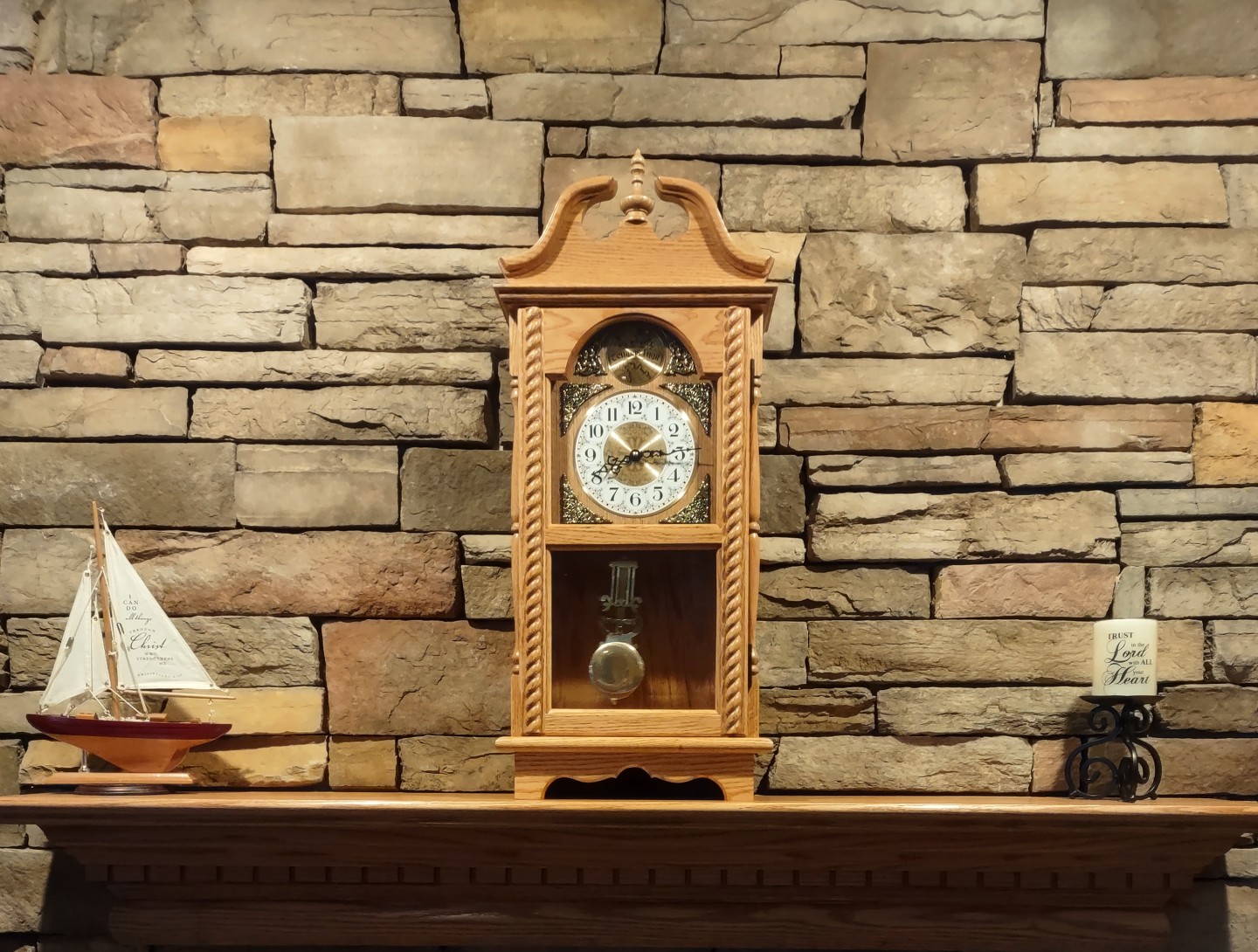
Mantel clocks, named for their small size suitable for resting on a fireplace mantle, are more than a simple timepiece. Made in the 18th century, these clocks were created to be both visually appealing and functional.
However, the true value of traditional mantel clocks goes beyond the aesthetics or even the practical aspect. As these timepieces pass down from one generation to another, they become a valuable family heirloom, preserving joy, sorrow, and celebration within their soothing tick-tocks.
Mantel clocks are available in hundreds of styles, making it a HUGE plus if you’re seeking a timepiece well-suited for your home decor.
Here are a few common styles of traditional mantel clocks:
Being recognizable instantly, this tambour style is most common in British homes. Regarding design, the timepiece is enclosed within an upright drum-shaped wrap. This, coupled with a round face and an extended base, is great for grabbing the attention of your guests.
Bracket mantel clocks are named after wall brackets and feature a square case along with a top handle. These wall-mounted timepieces are designed with a pendulum that swings below. The inclusion of a handle allows you to move this heavy clock from one room to another without any hassles.
Since Carriage mantel clocks are specifically made for traveling, they are generally smaller than their counterparts. Enclosed in a rectangular case, these undergo a robust construction process to deal with rough, bumpy journeys.
Back in 1845, Elias Ingraham, an American cabinet maker, was commissioned to produce a novel style of the clock case. As a result, mantel clocks in the steeple style came into existence. With a triangular-shaped top surrounded by columns, these timepieces bring Gothic vibes to any home decor.
Mostly produced in France and Switzerland, Art Deco is a geometric, sleek style inspired by the famous art of the 1930s. Just after its origin, it became so popular that manufacturers started to produce home decor and furniture designs (including mantel clocks) in this style.
As suggested by its name, this style contains an entirely open frame that exposes everything, from the clock’s inner mechanism to its movement. Though clocks in this style are visually attractive, the open design allows dust particles to reach inside easily. This, as a result, poses frequent maintenance challenges. However, the inclusion of a plain glass case helps overcome this issue.
Typically, there are two kinds of Mantel clock movement: Keywound and Quartz. Antique timepieces may run on Keywound movement, while modern ones incorporate a Quartz movement mechanism.
Let’s explore them in detail:
Basically, keywound mantel clocks operate through a mechanical method. To wind the clock, you are supposed to push the key right into the special keyhole and then gently turn it. This process stores potential energy in the clock’s mainspring, which gradually releases to power the clock’s movement.
Some key features of Keywound clock movement are as follows:
The quartz movement represents the modern evolution of clock technology. Typically, these clocks are designed to run by the battery; therefore, they are well-known to regulate precise timekeeping. This movement utilizes a quartz crystal to keep time, which vibrates at a consistent frequency when electricity is supplied.
Here are a few key features of Quartz movement:
To wrap it all up, traditional mantel clocks go beyond their primary function of timekeeping. They become cherished family heirlooms that contain both historical significance and emotional value.If you’re a fan of classic mantel clocks, the hunt for that perfect tick-locker is pretty challenging, right? Well, your search ends at Old Times Chimes. We specialize in offering an exquisite collection of traditional mantel clocks, each with its own unique story and charm.
Whether you’re seeking the elegant simplicity of Georgian pieces or the innovative charm of Art Deco clocks, you will surely find something that perfectly matches your home’s decor. So, don’t wait; browse our Shelf & Mantel Clock Collection now!
Mantel clocks were particularly popular during the 18th and 19th centuries, emerging as a staple of home decor. This period witnessed an increase in their production and diversity, reflecting advancements in clockmaking technology.
Identifying a mantel clock involves examining its size, style, and placement. Traditionally, these clocks are designed to be displayed on a shelf or mantelpiece, featuring a wide base for stability. Key attributes include ornate designs, a pendulum, and sometimes chiming mechanisms. Their aesthetic varies from classical to contemporary.
Mantel clocks are constructed from a variety of materials, with wood, metal, and marble being the most common. Wood variants often feature intricate carvings and inlays, while metal and marble ones showcase detailed designs and sculpted elements.