Have You Seen Our Clock Buying Guide?
We have developed a master guide to purchasing a custom Grandfather clock. Fill out the form to get access to our guide. (no email required)
Moving a grandfather clock? It’s enough to make anyone nervous. These timepieces are filled with delicate mechanisms that can easily be damaged if not handled correctly.
Should you try to move it yourself or hire professionals? Can a grandfather clock be laid flat, or does it always need to stay upright? There are many questions…and the wrong choices could damage your treasured family heirloom.
But don’t worry – I’ve got you covered. In this guide, I will walk you through the best ways to safely transport your grandfather clock, whether you’re moving across town or the country.
Let’s get into it.
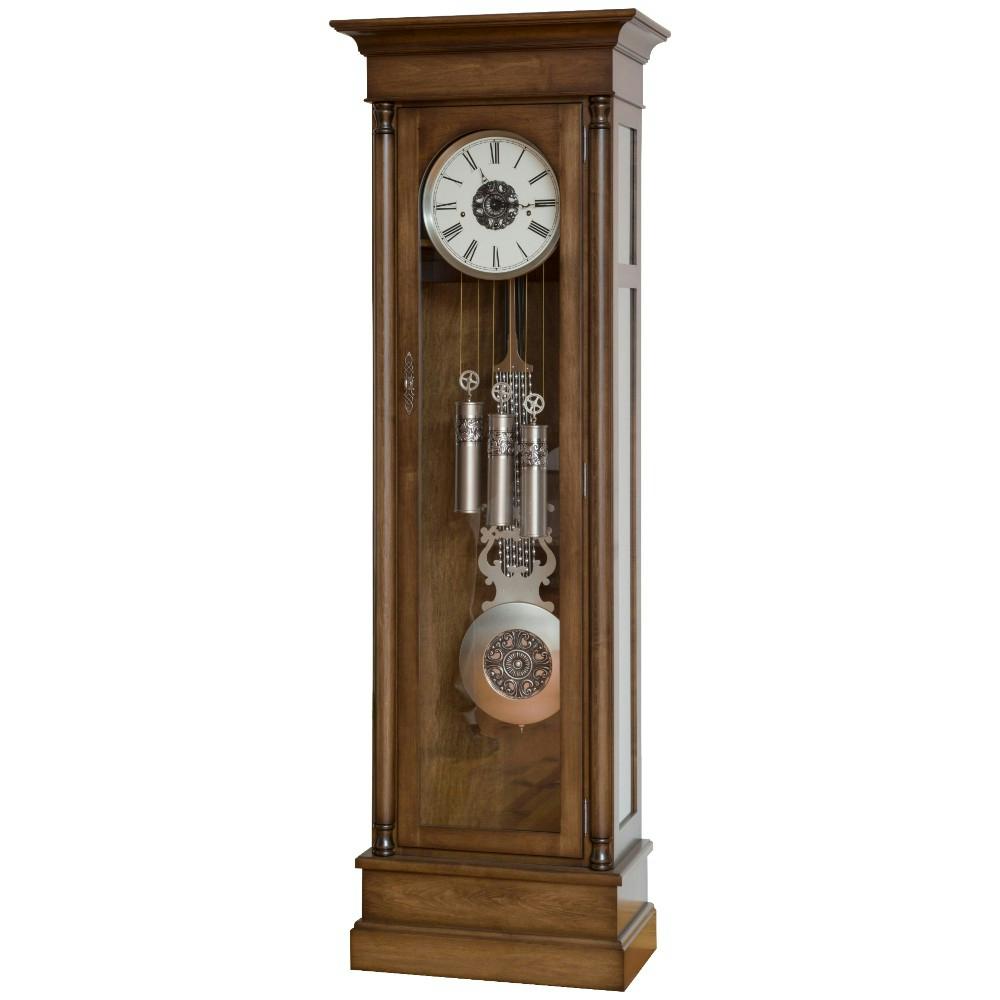
The ideal way to transport a grandfather clock is in an upright position. That ensures that the clock’s delicate internal mechanisms and parts stay in place. It also minimizes the risk of damage during the move.
However, there might be situations where laying your grandfather clock flat is unavoidable.
So, can you lay a grandfather clock flat then? Technically, yes, but understand that risks are involved. Here’s why:
If you must lay your grandfather clock flat during transport, careful preparation is essential to minimize the risk of damage. Here’s what you need to do:
Begin by carefully removing the weights and pendulum from your grandfather clock. These components are heavy and prone to shifting, potentially causing significant damage if left attached during transport.
Wrap the weights and pendulum individually in soft padding and store them in a separate, secure box.
Next, identify detachable elements on your clock, such as removable shelves, decorative finials, or ornamentation. Carefully remove these and wrap them individually in protective materials as well. Store them separately to prevent breakage.
The internal workings of a grandfather clock are delicate and precise. Consult the owner’s manual, if available, for model-specific instructions on stabilizing or securing internal parts before moving the clock. That’s because the manual might recommend ways to temporarily fasten the gears or other components to minimize the risk of dislodgement while the clock is on its side.
If you need the owner’s manual or feel unsure about handling the clock’s mechanisms, it’s always best to consult a qualified clock repair expert. They can provide guidance and handle the preparation steps for you.
Always lay your grandfather clock on its back, typically the most stable and well-supported side of the clock’s case. Select a flat surface for laying the clock down as an uneven floor can put undue stress on the case and potentially warp the wood.
Thoroughly pad the entire grandfather clock, paying close attention to any protruding elements or corners. Use blankets, furniture pads, pillows, or packing foam to create a soft, protective layer around the clock’s case.
The goal is to provide even support and prevent any part of the clock from coming into direct contact with a hard surface. Once the padding is in place, consider gently securing it with packing tape or straps to ensure it doesn’t shift during transport.
While laying a grandfather clock flat might be necessary in some situations, the safest way to transport these timepieces is always in an upright position. Here’s a closer look at the ideal transport methods:
Renting or borrowing a truck or van allows you to transport your grandfather clock upright safely. Choose a vehicle with enough height and floor space to accommodate the clock without tilting or leaning against other items. Once the clock is loaded, use heavy-duty straps or ropes to secure it firmly, preventing movement during the drive. Place padding where the straps contact the clock’s case to protect the finish.
If moving your grandfather clock feels overwhelming or you’re concerned about potential damage, hiring professional movers is often the best action. Look for moving companies that specialize in handling antiques, fragile items, or pianos. These movers have the experience, equipment, and expertise to properly pack, transport, and reassemble your grandfather clock safely and efficiently.
Consider professional movers if:
Beyond the essential preparation steps, here are a few more things to keep in mind when moving your grandfather clock:
Insurance: Consider obtaining insurance for the move for antique or particularly valuable grandfather clocks. This provides financial protection in the unfortunate event of accidental damage during transit.
Moving a grandfather clock requires careful planning and attention to detail. While upright transportation is always preferred, there might be situations where laying your clock flat is the only option.
By following the preparation and safety tips outlined in this guide, you can minimize risks and ensure your clock arrives at its new home in good condition.
However, if moving your grandfather clock yourself feels daunting, remember that help is available. Professional movers with experience handling delicate antiques can take the stress out of the process.
For those who envision a grandfather clock that’s truly unique and a perfect reflection of their style, consider a custom creation from Old Time Chimes.
Our skilled artisans will work with you to design a one-of-a-kind timepiece that embodies your vision and becomes a cherished heirloom for your family.
Contact us today to start exploring the possibilities of a custom grandfather clock designed just for you.