Get First Word on Deals & News
Be the first to hear about special deals, new clock designs, and company news from Old Time Chimes. Unsubscribe anytime.
There is a tall case clock standing in the Oval Office. John and Thomas Seymour built its case in Boston around 1795 to 1805, in the Federal style, in mahogany, with the kind of lunette inlay banding that made the Seymour shop famous. The movement was possibly the work of James Doull of Charlestown, Massachusetts. The White House Historical Association gave it to the White House in 1972, and it has kept quiet company with presidents ever since.
In November 2023 we were asked whether we could build another one.
The email came on Nov. 16, 2023, from a project manager at Kubik Maltbie Inc., the exhibit fabricator in Mount Laurel, New Jersey. Kubik Maltbie had been awarded the exhibit scope for the Obama Presidential Center in Chicago, and part of that scope was a recreation of the Oval Office on Level 4 of the museum. They needed the clock.
Our first question was whether we could see the original. The answer was no. We would be working from photographs — and at the start, not very good ones. That single constraint shaped the next two years.
We sent a proposal on Dec. 2, 2023. Kubik Maltbie took the shop-drawing option immediately, because the Obama Foundation runs a strict submittal process and nothing gets fabricated before approval. The Foundation approved our drawings on March 11, 2024, with one condition: the case wall could be no thicker than 3/4 inch, so the audio device mounted inside would work.
Our reference was a handful of photographs and a White House Historical Association catalog entry: single lunette inlay in bands on waist and base; double lunette inlay on plinths for bonnet finials and waist quarter columns; unmarked painted dial. Every ambiguous detail became a question, then a submittal.
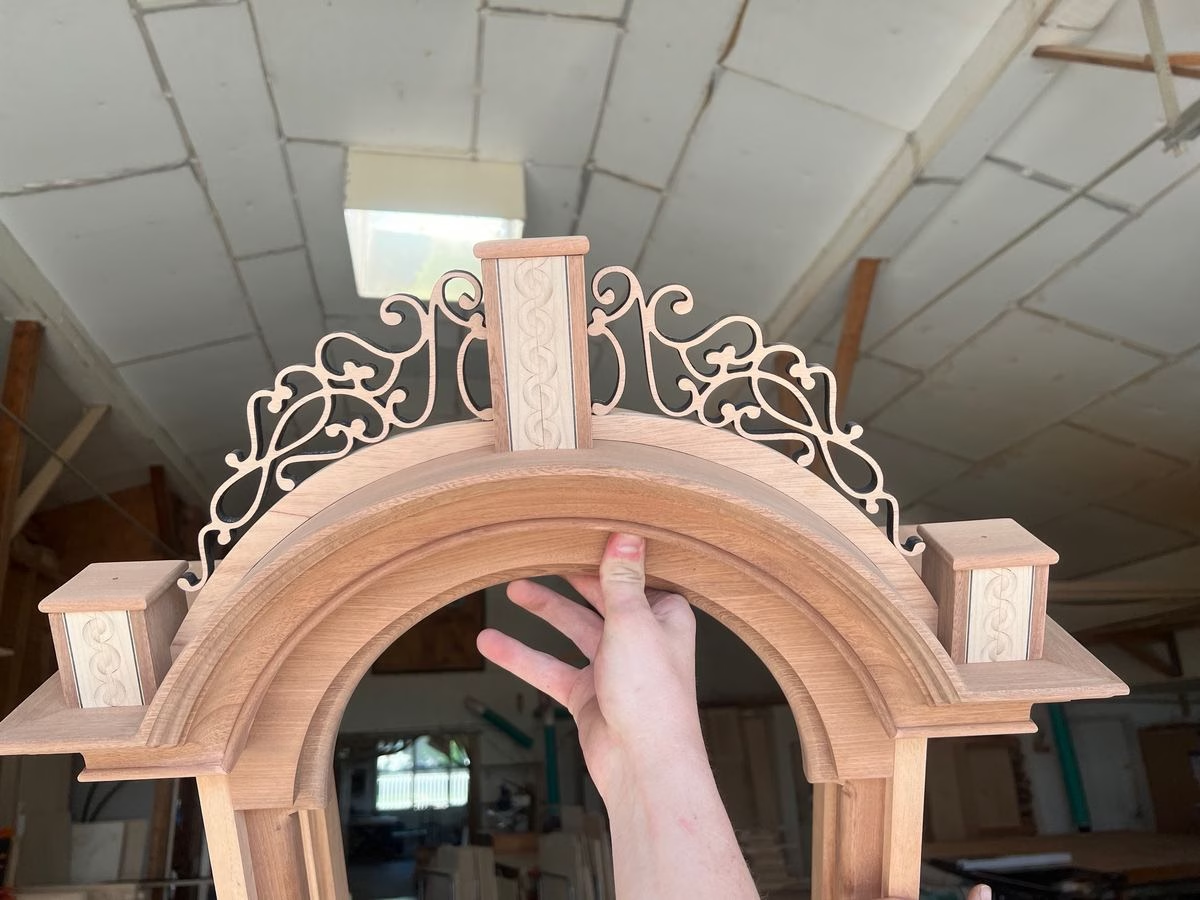
Take the pierced crest above the bonnet. From our photos we assumed it was metal — wood that thin and that openly fretted seemed impossibly fragile. We submitted a drawing for a metal part and the Foundation approved it. Then Kubik Maltbie went back to the White House Historical Association, who sent detail photographs: the element is mahogany, roughly 1/4 inch thick, and the pierced upper portion is part of the same solid piece as the section below, because the grain runs continuously from one into the other.
We tore up the metal drawing and cut it from mahogany.
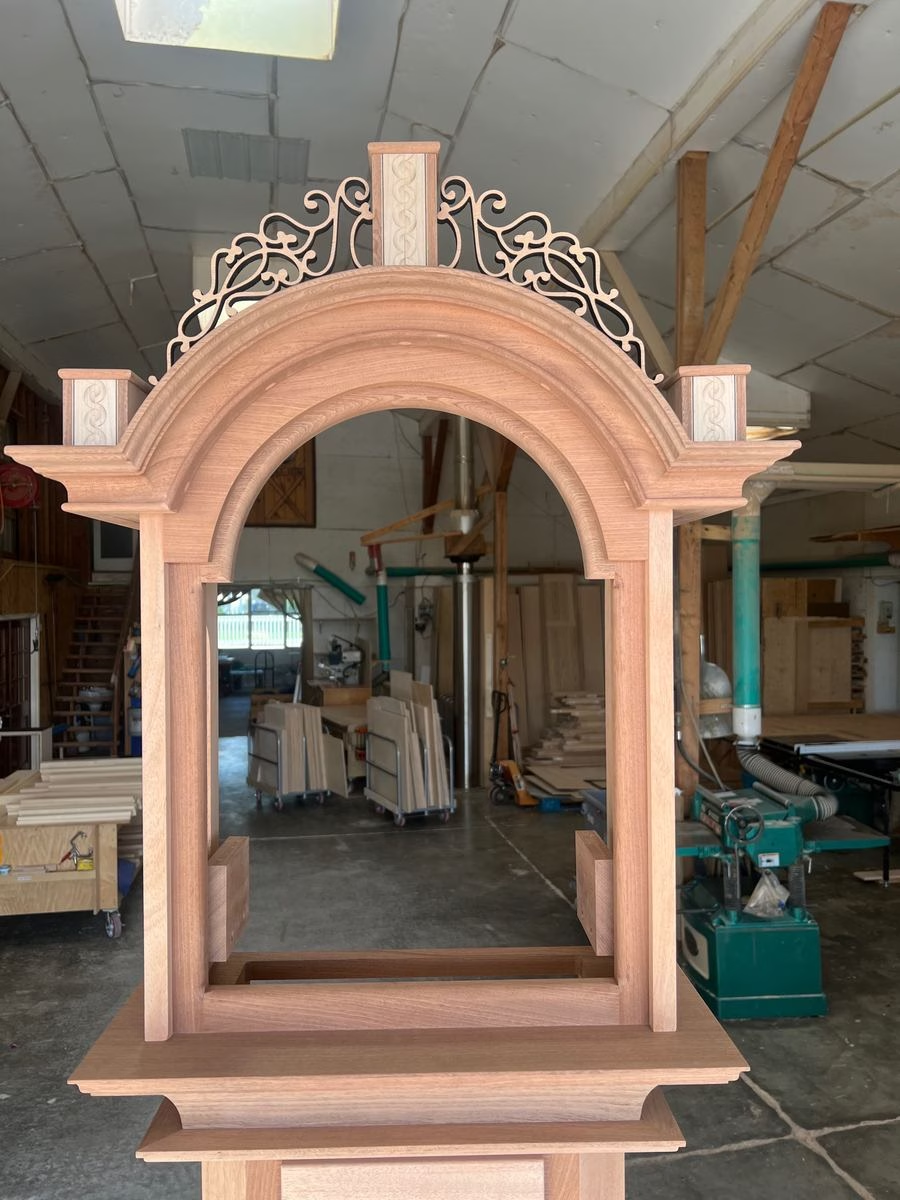
The finials went the same way. Our first photo showed three identical finials; a sharper one appeared to show the outer two with a more oval sphere. We asked, and on June 25, 2024 the Foundation ruled: all three the same, matching the original inventory photograph. For the case color, they reviewed four OCS stains on mahogany and chose OCS 106 Acres.
The build went to an Amish clock shop in Kentucky we have worked with for years — a father, a son, and the craftsman who did most of the bench work.
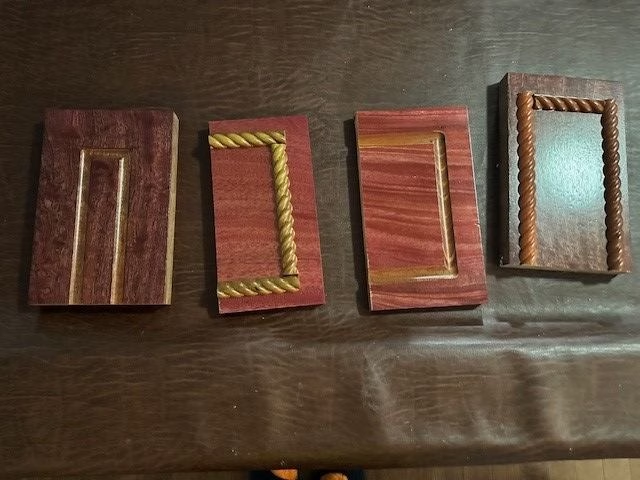
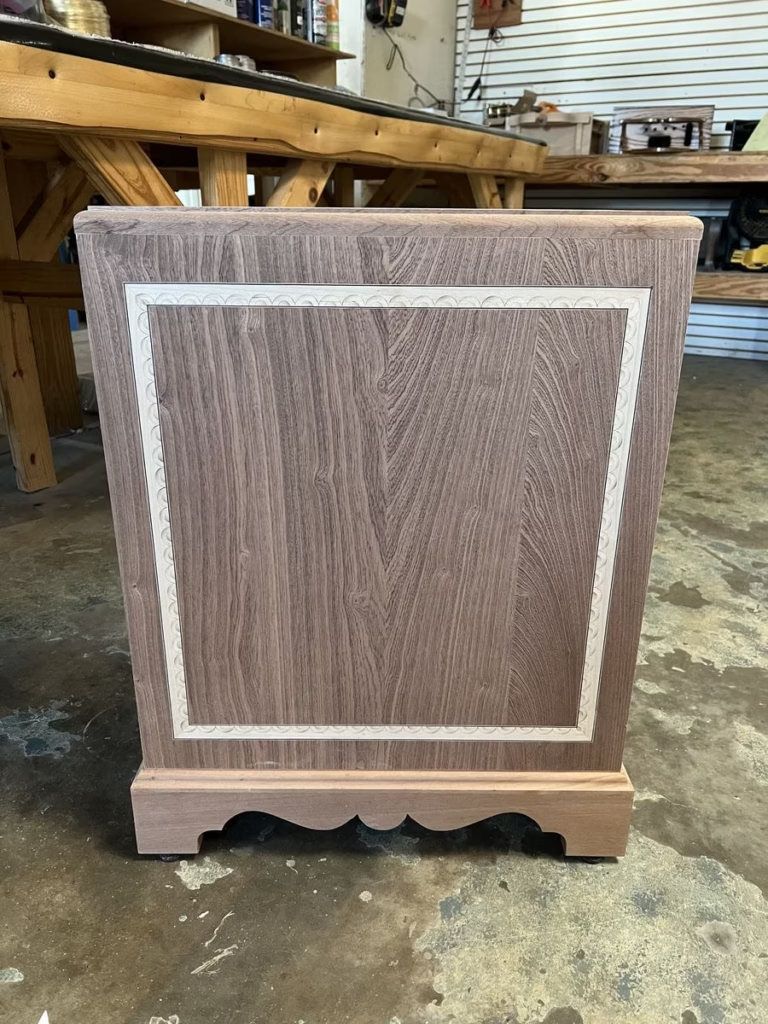
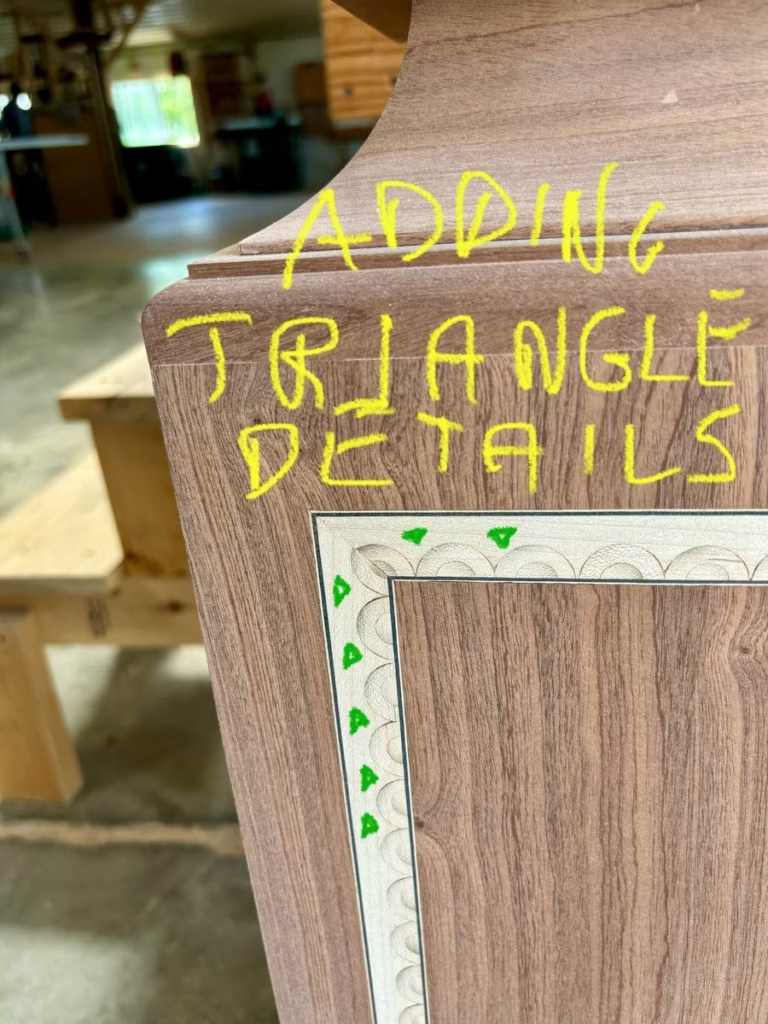
The lunette banding is the detail enthusiasts will notice first. It came in 36-inch by 3/4-inch lengths, and it is not surface-applied: it sits in a 1/8-inch dado cut to the exact depth of the banding, flush with the mahogany. The small dark triangles between the half-rounds weren’t part of the banding stock at all — on the original they were burned in afterward. So they were burned in by hand, one at a time.
The movement was forced by the case. Our standard grandfather clock movement needs more room than a Seymour gives you; the pendulum swing does not fit in 10 3/8 inches of depth. We specified a Hermle 241-030, a chain- and weight-driven eight-day movement narrow enough to live inside the trunk. (If you want the background on how these differ, we wrote a guide to mechanical Amish clock movements.)
The dial is its own story. We drew it and had it cut from 1/16-inch stainless steel — then the welder we lined up for the four mounting posts priced himself out of the job. Our dial painter put us onto a metal fabricator whose dials she had painted before; he welded the posts, test-fit the plate to a 241 movement, and shipped it on.
Then she painted it, in her Massachusetts studio, where she has been painting and restoring clock dials since 1986. Her method, in her words: scrub the plate clean both sides, prime the back in oil-base brown/black the way the old dials were done, prime the front white, two coats of hand-mixed white over that, transfer a full-size tracing, outline the graphics in India ink. Gesso for the raised work. 23-karat gold leaf. No acrylics. For the moon disc she painted a burning frigate, working from a Boston dial signed Aaron Willard Jr. — same size, same spandrel motif.
Painting a new dial from scratch takes three weeks. All dictated by drying time.
Our dial painter, February 2025
Two problems nearly derailed the finish line, and both came out of the client’s shop inspection in April 2025.
The overall verdict was generous — “Overall comment is that it looks amazing” — but the inspection flagged the clock face. Our painter had rendered the seconds hand directly onto the dial, the way many period dials were done. The client expected a physical hand.
There was no clean fix. The smallest Hermle movement offering a seconds hand is the 451, and the 451 does not fit a Seymour case. So: she mixed a fresh batch of the exact background color so the painted hand could be blended away, and when that blend didn’t come out cleanly at the shop, the dial went back to her studio in June 2025 for her to remove it herself. Then we mounted a stand-alone battery movement behind the dial to carry a real seconds hand.
The moon disc raised a similar question. It spins, but it isn’t driven by the movement — noted on the approved drawings from the start. Since it would sit in one position permanently, the Foundation chose which: the shop photographed the dial with the moon in several attitudes, and on Aug. 15, 2025 we sent back the selection.
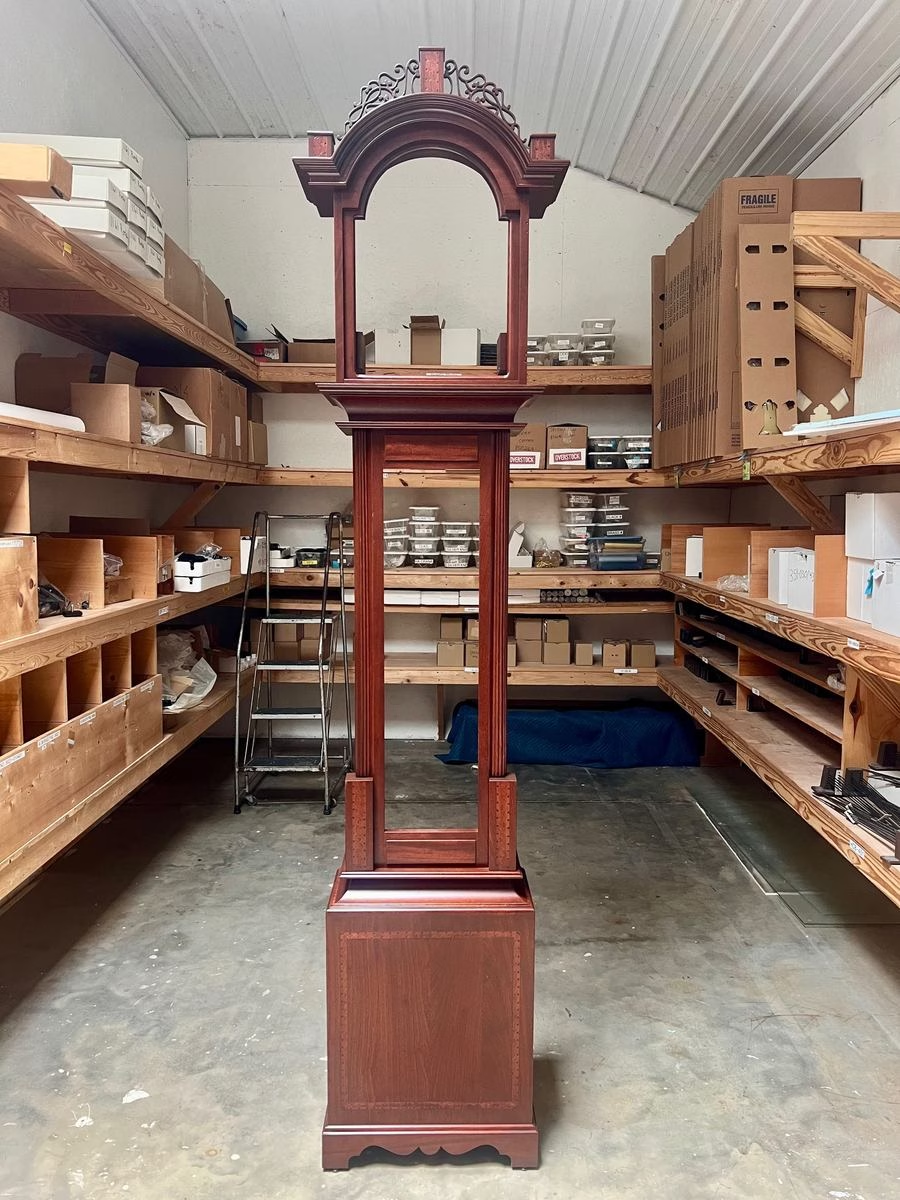
Two of the shop’s craftsmen drove the clock up from Kentucky in October 2025, in full PPE, into what was still an active construction site. They set it in place on Oct. 15, 2025. Kubik Maltbie’s project manager wrote the same day that delivery was done and the crew had been terrific.
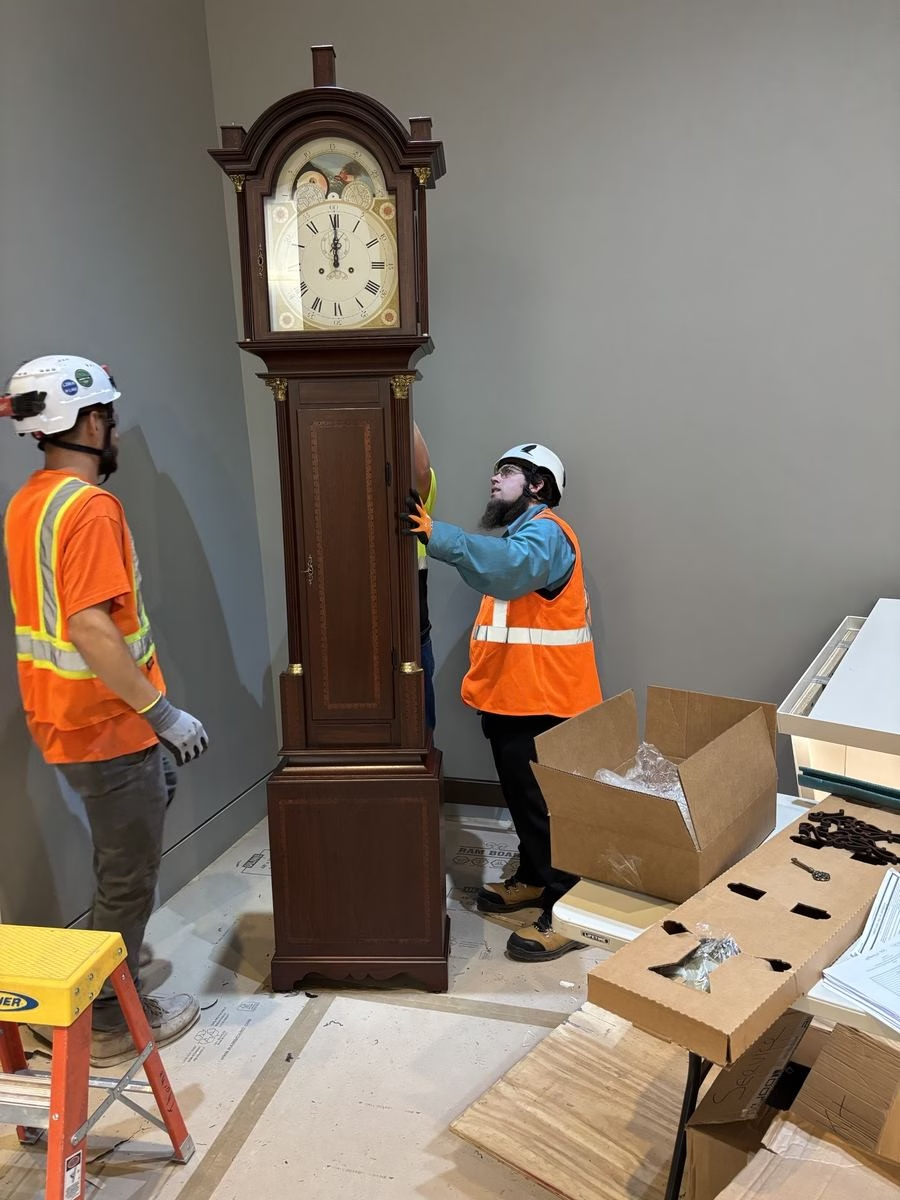
The museum opened for preview tours on May 4, 2026. The Oval Office recreation, clock included, appeared on network television the following week.
We are not a museum shop. We are an online retailer working with Amish builders, and this was our first historical reproduction. It showed — the crew put in more than 180 hours, over double the estimate.
We would take on work like it again. Reproduction work is how period technique stays alive: someone has to burn the triangles in by hand and cut a fretted crest from a single piece of quarter-inch mahogany, or the knowledge quietly stops being knowledge. A visitor on Level 4 sees a clock. What is standing there is a Boston cabinet shop’s vocabulary from 1800, spoken back in 2025 by a Kentucky woodworker and a Massachusetts dial painter.
The case, dial, inlay and hardware were reproduced as closely as photographs and White House Historical Association documentation allowed. The movement is not a reproduction — the original is a period brass weight-driven movement, and this clock uses a modern Hermle. A few details, including the column capitals and bases, were matched from the closest available sources and approved by the Obama Foundation where no clear photograph existed.
A Hermle 241-030, chain- and weight-driven, eight-day. The Seymour case is only 10 3/8 inches deep, which rules out the wider pendulum swing that a standard grandfather clock movement needs.
No. The moon disc spins freely but is not linked to the movement, which was specified on the approved drawings from the outset. The Obama Foundation selected which portion of the disc would be visible.
Yes. It is an eight-day chain- and weight-driven movement, so it is wound by pulling the chains, and the main door was built hinged and locking so museum staff can reach it. We supplied a written operation, troubleshooting and maintenance manual with the clock.
No. This clock was a one-off commission for the Obama Presidential Center, and we don’t reproduce it for sale.
Yes. We take on custom reproduction work — a clock in your family, a piece in a collection, a design you’ve only got photographs of. Reproductions at this level of historical detail are a different proposition from our catalog grandfather clocks; this one ran to more than 180 shop hours, and the research and approvals took longer than the woodworking. If you have something in mind, tell us what you have to work from and we’ll tell you honestly whether it’s buildable.
Go see it. The clock stands in the Oval Office recreation on Level 4 of the museum at the Obama Presidential Center in Chicago.
Have a different clock in mind? We don’t reproduce the Seymour, but we do build custom reproductions of other clocks — a family piece, a period case, a design you have only in photographs. Tell us what you’re working from and we’ll give you a straight answer on whether it can be built, or start with our custom clock collection.