Have You Seen Our Clock Buying Guide?
We have developed a master guide to purchasing a custom Grandfather clock. Fill out the form to get access to our guide. (no email required)
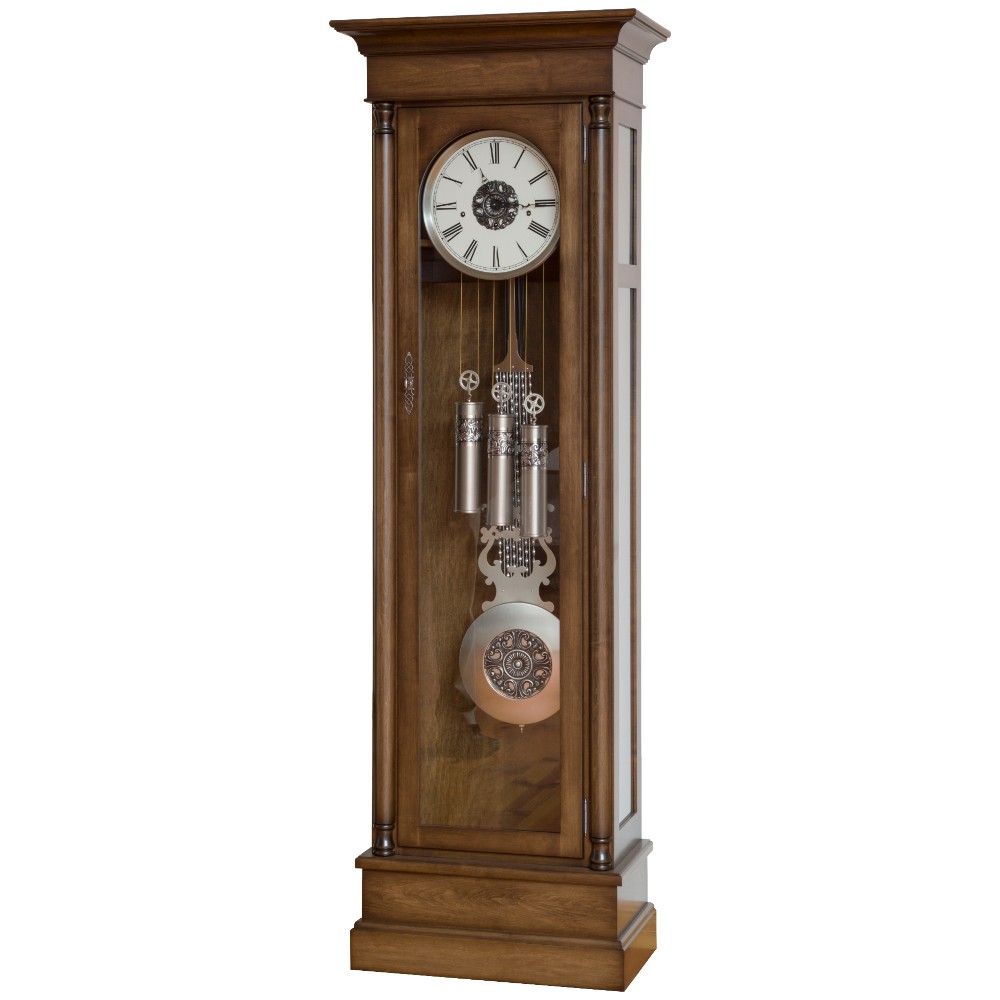
What makes grandfather clocks more than a timepiece? It’s “the case” that makes it a unique and mesmerizing piece of furniture that you will cherish for years to come. Not only do these cases enhance the aesthetic appeal, but they are made to last, hence often treasured as a family heirloom and heritage.
Hence, these cases are integral to the grandfather clock’s one-of-a-kind identity and character. Want to explore the floor clocks more? From wood material to glass and metal, this article discusses everything about grandfather clocks and their cases.
Keep on reading!
The earliest and most traditional grandfather clocks were made using wood. As time passed, grandfather clocks and their cases also evolved to incorporate modern material, design, and style.
The most common material that is used now for the making of grandfather clocks include:
Wood is the primary material to craft any grandfather clock; therefore, the quality of wood determines the life and longevity of the entire timepiece. To ensure durability, high-quality hardwood is utilized for the cases, and the type of wood is selected based on its strength, rot resistance, and other such capabilities.
Here is a list of the most preferred wood materials for longcase clocks’ cases:
The number 1 choice of the majority of clockmakers is oakwood. This hardwood is known for its strength, durability, and distinctive grain pattern.
Besides these qualities, here are a few more features that make oak a perfect choice for grandfather clock cases.
Color Variation: From creamy light shade to rich reddish brown, oakwood brings a variety of color choices to the grandfather clock case. So, whatever your personal taste or decor type is, the case can be customized as per your preference.
Another popular choice for a grandfather clock is maple wood. Most woodworkers and traditional clockmakers prefer it for a variety of reasons.
Creamy Light Color: The most prominent feature of maple wood is its delicate, creamy color, which looks more uniform after it is stained.
From rich color and straight pattern to weather-resistant nature, black walnut has all the qualities to be a perfect wood material to craft grandfather clock cases. Some of its distinctive features are mentioned below:
Smooth Texture: Walnut wood has a straight grain, but some walnut wood even exhibits a curl, wavy, or knot-like pattern. Overall, the walnut wood species has a smooth finish, making it a perfect choice for crafting sleek grandfather clock cases.
Mahogany has been a prime choice for clock and furniture making since the 18th century. Longcase clocks made of this wood material evoke a sense of tradition, heritage, and craftsmanship. Here are a few more practical reasons to use this for clock cases:
Besides wood, brass metal is also widely used for grandfather clocks and their cases. Below are some ways brass is incorporated into the making of clock cases:
Glass is another important element of grandfather clocks’ cases that provides visibility into the movement of the inner workings and the clock’s mechanism. These are the two types of glass materials that are most commonly used for clock construction.
Stained Glass: Although stained glass doesn’t provide much visibility into the internal mechanism, it is chosen by those who prefer an artistic touch to their longcase clocks. The panels made of stained glass are often adorned with vibrant colors and intricate patterns. Moreover, they can be customized to complement the overall look and feel of the clock.
Whether you are looking for a premium longcase clock made of oak or walnut, at Old Time Chimes, you get a timepiece that fits your choice. From premium brass material to top-quality hardwood and glass, we craft a longcase clock using the material you prefer.
Check out our exquisite collection of grandfather clocks and contact us now to get one made just as you wish.