Have You Seen Our Clock Buying Guide?
We have developed a master guide to purchasing a custom Grandfather clock. Fill out the form to get access to our guide. (no email required)
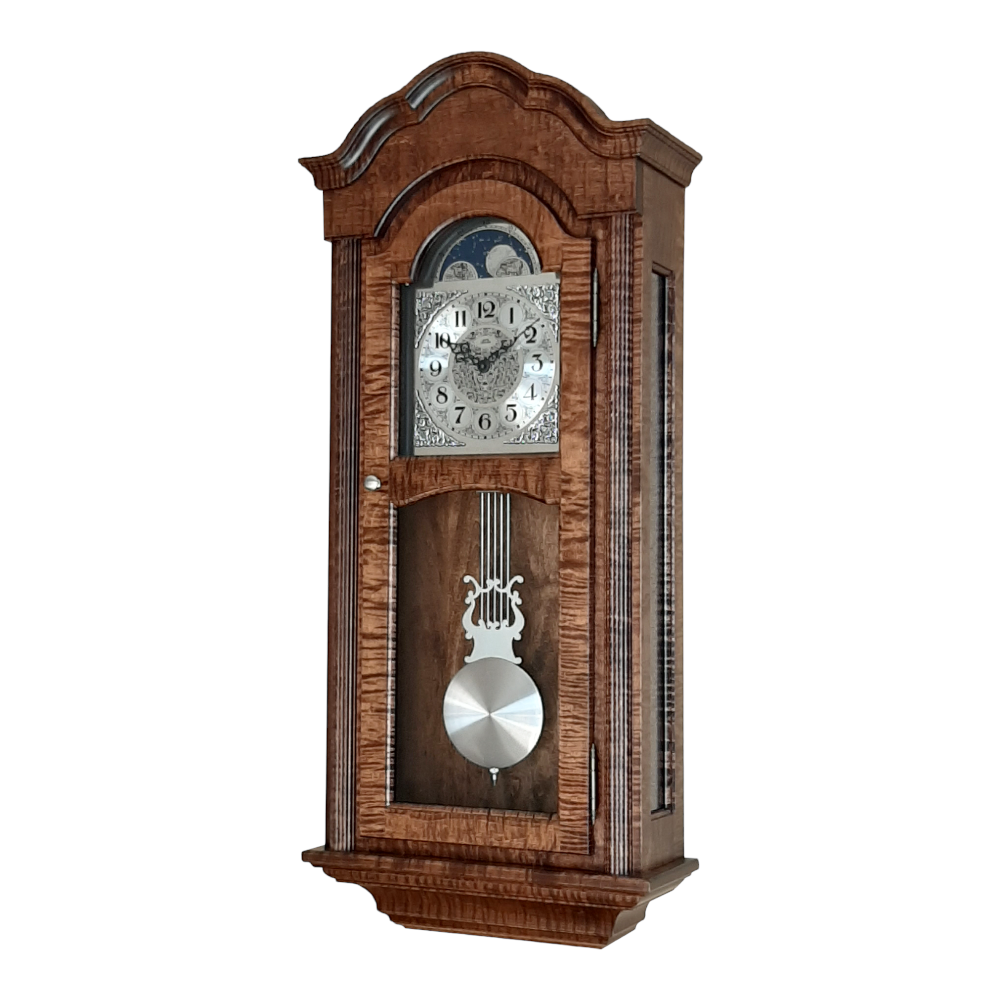
From battery wall clocks to traditional grandfather clocks, you may be wondering what type of clock would work best for you and your home. While grandfather clocks are beautiful, timeless pieces that cannot be replaced, you may be looking for something a little smaller. That’s where wall clocks come in handy. So if you are looking for a smaller clock that has the look and feel of the traditional grandfather, a wall clock is in order.
Today, we will compare battery wall clocks with your traditional windup clocks and consider the pros and cons of both. With a good understanding of battery wall clocks, you will be able to make an informed decision on what works best for you.
You may have wondered: How do battery wall clocks work? Without the need for an electrical plug-in, Battery wall clocks operate by simply inputting the right battery, requiring minimal effort on your part.
But let’s dig deeper. Let’s explore the inner workings of a battery wall clock and the science behind it.
Inside a battery-operated clock is a quartz crystal. This is what is used to signal the timing. The battery you insert is then used to power the quartz through electronic impulses, creating vibrations at a precise frequency which, in turn, powers the hands of the clock to move at the right time.
In this way, battery clocks prove to be more simple than a traditional windup clock. Windup clocks are powered by a spring mechanism that needs to be wound every so often.
That leads us to ask: What works better? A battery-operated wall clock or a windup wall clock?
Ready for the pros and cons of Battery Wall Clocks?
Let’s start with all the good bits first.
Okay, no let’s consider the cons that may affect your buying decisions.
Looking for that perfect wall clock to match your home, but can’t seem to find one online? Well, have you ever considered having one customized to match the clock you envisioned?
At Old Times Chimes, our Amish clock craftsmen take personalized orders and crest beautiful, timeless clocks designed by you. So whether you are looking for a battery wall clock, a windup wall clock, or a different type of clock, get in touch with us. We will help you craft your very own clock —one that was truly made for you.
Battery-operated wall clocks use a battery-powered quartz movement for precise timekeeping, while traditional wind-up clocks rely on mechanical gears wound manually to function. Battery clocks are generally accurate but require periodic battery replacement, whereas wind-up clocks need regular winding and don’t rely on batteries.
The batteries you use may vary from clock to clock. Most wall clocks use standard AA or AAA batteries. However, the specific battery type can vary by clock model, so we recommend checking the clock’s instructions or label for the recommended battery size and type.
The lifespan of battery-operated wall clocks depends on factors like the type of batteries used, the quality of the clock’s movement, and how frequently it chimes (if it has a chiming function). But generally speaking, good-quality batteries can last anywhere from one to two years in a standard wall clock. We recommend regularly replacing the batteries to help maintain accurate timekeeping.
Definitely. We will help you find grandfather-style wall clocks that are battery-operated. These clocks often mimic the appearance of traditional grandfather clocks but use a battery-powered quartz movement for timekeeping instead of the mechanical pendulum and weights found in traditional grandfather clocks.
The choice between a battery-operated and a wind-up wall clock really depends on your preferences and lifestyle. Battery clocks are very low-maintenance, requiring periodic battery changes. On the other hand, wind-up clocks need manual winding but don’t rely on batteries. Factors such as convenience, maintenance, and your preference for the clock’s operation will need to be considered when making your decision.